Psst! Lean in. Closer... Closer... Okay, not THAT close! Today, we're diving into the world of taper haircuts. Rolling your eyes? Don't blame you. It sounds like an easy gig, but mastering the perfect taper is like finessing that swoon-worthy latte design—one slip, and you're frothy mess bound. Luckily, we're here to ensure your snip game is sharper than a samurai blade. So grab your clippers and let’s glide on through the pillowy wondrousness of taper haircuts!
First off, let's talk tools. Just as a samurai wouldn't wield a butter knife to battle, a barber shouldn't cut corners on choice tools. On BarberSets.com, you’ll find an array of accessories so diverse they’d make a Swiss Army knife blush. Here’s the lowdown on essentials you’ll need:
-
Clippers: No rocket science here. High-quality clippers won’t just make your job easier; they’ll save you from the wrath of uneven lines and patchy fades.
-
Scissors: For those finishing touches. The type your grandmother uses to cut wrapping paper won’t make the cut (pun intended).
-
Comb: Preferably a wide-tooth comb for easy sectioning and detangling.
-
Trimmers: For detailing those intricate edges.
-
Barber Cape: Cape yourself, dear friend, because hair shrapnel isn’t fun.
-
Mirrors: Both handheld and stationary mirrors for panoramic precision.
Okay, now that you’ve armed yourself with the Infinity Stones of the barbering world, let’s trim the fat and get into the juicy bits—how to actually perform a taper haircut.
Step 1: Set the Stage
Place your cape over your client (a.k.a. canvas) and ensure they’re comfortably seated. Having a distracted or fidgety client is like playing darts on a moving boat. You’re in charge now, Captain.
Step 2: Start with the Sides
Use the longest guard on your clipper; this is typically the #4 guard. Begin at the sideburns and move upwards towards the crown. Your motion should be like a smooth scooping action, working from the bottom of the sides up to about an inch above the ear. Do this for both sides. Picture painting a masterpiece but in reverse: You’re erasing rather than drawing.
Step 3: Sculpt the Back
For the back, use the same method. Start from the nape and move upwards in similar scooping strokes. The nape should consist of the shortest length, graduating to slightly longer lengths as you move upward. Your clipper should glide up, peeling away hair like layers of an onion (without the tears, hopefully).
Step 4: Blend, Blend, Blend
Switch to a shorter guard—perhaps a #2 or #3. Start blending the sides and back into the longer lengths on top. Blending is like making the perfect smoothie; you want a seamless mix, without any chunks. Continue to use the scooping motion, ever so gently reducing bulk without creating visible lines.
Step 5: Top it Off
Now for the pièce de résistance—the top. With scissors this time, trim as needed, keeping in mind the overall structure. The top should transition naturally into the taper, with no sudden jumps in length. Fun fact: A great taper is like a crescendo in music; it builds up smoothly and steadily to the peak.
Step 6: The Fine Details
Switch back to your trimmers for the edges and neckline. Clean up stray hairs and create sharp, precise lines. Careful now; the edges are like a fine wine glass—delicate and easy to ruin with one overzealous swipe.
Pro Tips:
- A tapered neckline looks more natural and softer compared to a blunt one.
- Check your work as you go; constantly looking at it from different angles will help you avoid any "oops" moments later.
- Keep your tools clean and oiled for maximum efficiency and longevity—both yours and the tools’!
Remember,
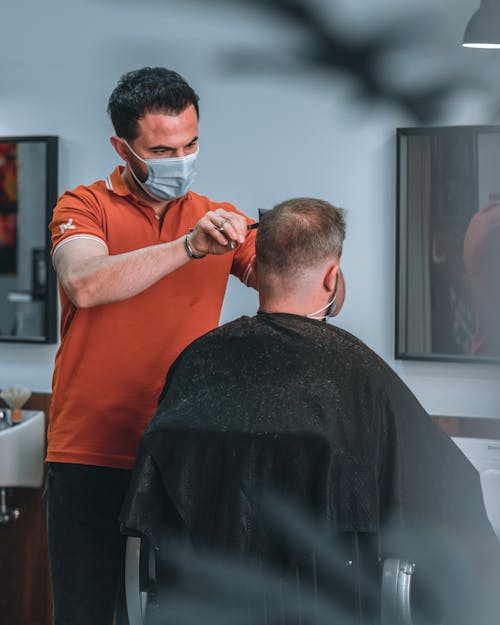
Remember, Rome wasn't built in a day, and neither will your taper haircut skills. Keep practicing and soon you'll be tapering like a pro!
Step 7: Keep it Consistent
Consistency is key, my friends. Make sure that both sides are even. Symmetry in haircuts can be the difference between someone looking like a Hollywood star and looking like a lopsided Picasso! Stand back frequently and check your work from different angles. Trust, this little habit helps in catching those “Oh no!” moments before they become monumental disasters.
Step 8: Handle Those Cowlicks
Ah, cowlicks. The arch-nemesis of every barber. These rebellious patches of hair can ruin your taper if not dealt with properly. When trimming cowlicks, follow the natural direction of hair growth to keep them tamed. If you're aggressive, they’ll spring out like a Jack-in-the-box, but mendable with patience and the right technique.
Step 9: Use Different Guards for Different Layers
The devil is in the details, and the details lie in the lengths. Use varying guard sizes to add dimension to your taper. The #2 guard for the lower base, maybe a #1 for near the hairline. Playing with different lengths creates a gradual change that’s both pleasing and professional. It’s like painting a gradient but with hair.
Step 10: Check the Crown
The crown area is tricky since it's often denser and behaves differently from other parts of the head. Comb the hair in its natural fall and trim conservatively. You don’t want an unintentional mohawk unless that’s the plan! Consistent checking and rechecking are your best friends here.
Step 11: Final Polish
The last stage involves touching up and making sure every inch is immaculate. Comb through the hair, check for any uneven spots, and snip away any rogue strands. This is your final coat of varnish, the polish that makes everything pop and ensures satisfaction.
Post-Cut Maintenance Tips for Your Clients:
You're done, the client is happy, but what about keeping that fresh taper look sharp? Share some post-cut maintenance tips with your clients to keep them looking dapper until their next appointment.
-
Regular Trims: Recommend a touch-up every 3-4 weeks to maintain that crisp look.
-
Good Shampoo and Conditioner: Suggest products tailored to their hair type. Trust us, a good shampoo and conditioner combo can work wonders on any haircut.
-
Proper Styling Products: Use pomades, waxes, or gels to keep the hair in place. Advising your clients on the best products can significantly enhance their hairstyle.
-
Avoid Over-washing: Inform them that washing hair too often can strip natural oils and make hair look dry and frizzy.
By equipping your clients with these maintenance tips, not only will they thank you but they'll also come back raving about how great their hair still looks weeks later.
DIY Troubleshooting Tips:
Even seasoned barbers can have a momentary lapse in judgment. Here are some troubleshooting tips if you encounter a hairtastrophe:
-
Uneven Lines: Switch to a shorter guard and carefully blend the lines out. Patience and light touches can fix most unevenness.
-
Accidental Short Spots: If you accidentally go too short in one spot, you may need to blend the surrounding areas to match. Reversing a mistake could require more time but better that than a noticeable mishap.
-
Missed Hairs: After the primary cut, comb through and use your trimmers to nip any stragglers. These missed spots are common but easily correctable.
-
Symmetry Issues: Frequently step back and use mirrors to check the balance. Adjust as needed but avoid over-trimming in a panic!
Let's Take a Moment to Talk About Barber Ethics:
Cutting hair isn't just about wielding scissors or clippers. It's also about understanding and respecting the wishes of your clients. Listen to them. Ask questions if you're unsure about what they want. Clear communication can save you both a world of trouble.
1. Respect their Hair Journey. Not everyone will have a clear idea of what they want. Be supportive and provide suggestions that you think will suit them best.
2. Honesty is the Best Policy. If a requested style isn't feasible due to hair type or face shape, be honest. Offer alternatives that still support their desired look.
3. Patience is Virtue. Some clients may be indecisive. Give them time and don't rush the process.
And Finally, The Ultimate Barber Secret:
Smile and enjoy what you do! Remember that clients sense and appreciate when you're passionate about your craft. A happy barber equals a happy client. Spread that joy, and it will come back tenfold in referrals and repeat customers.
So there you have it, the complete guide to mastering the art of the taper haircut. Will it make you an overnight hero in the barbering community? Maybe, maybe not. But will it sharpen your skills and get you closer to that Vitruvian Barber state? Absolutely!
Before you head off to give your next taper, remember to check out BarberSets.com for top-quality barbering gear that can make or break your game. Now go forth, clip, snip, and taper to your heart’s content. The world needs more great hair, and you’re the artist to provide it.
Happy cutting!


Leave a comment